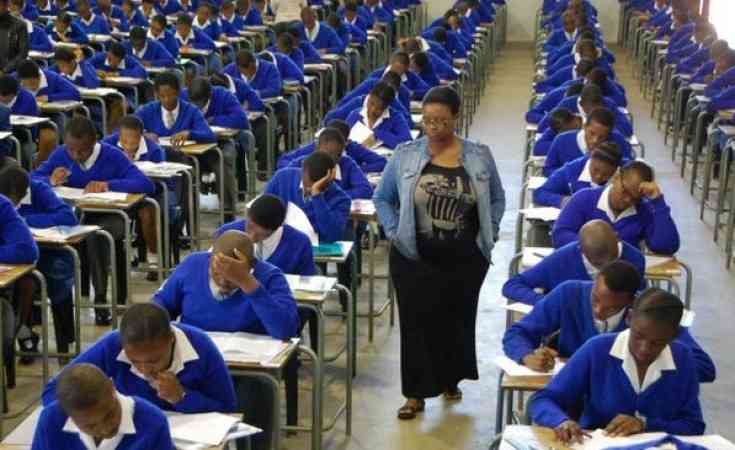
Zimbabwe's June examination season is underway. O Level candidates are paying US$24 per subject and external candidates US$48, with no government subsidy available for the June sitting, since these papers are designed for students rewriting or supplementing previous results.
For families in rural areas, that cost per child for a standard subject combination can exceed a month's income.
The fees are the most visible barrier. The structural ones run deeper.
The Progressive Teachers Union of Zimbabwe estimates the country loses approximately 15 000 teachers annually through migration, retirement and death.
Against that haemorrhage, parliament recently approved recruiting 2 000 teachers this year.
The Amalgamated Rural Teachers Union of Zimbabwe called that figure an insignificant 2.22% of what is actually needed, describing the recruitment as "a psychological band-aid."
The arithmetic is difficult to argue with. In some schools, a single teacher handles more than 60 learners, while others are forced to teach composite classes involving two grades simultaneously.
A parliamentary committee found that in Gwanda district alone, filling vacancies after a teacher leaves or retires can take up to three years, with science, mathematics and agriculture the subjects most severely affected. A 2024 Ministry of Primary and Secondary Education audit, cited in the background material provided to this reporter, recorded textbook-to-pupil ratios as low as 1:8 in rural schools. That figure has not been independently released by MoPSE and requires confirmation from the ministry's communications directorate.
- Schools closure fuel drug abuse
- Riding roughshod on restive workers will backfire Mr President
- Schools closure fuel drug abuse
- Riding roughshod on restive workers will backfire Mr President
Keep Reading
What is confirmed is what the results show. The national O Level pass rate stood at 33.19% in 2024, prompting Zimsec board chairperson Paul Mapfumo to warn that two-thirds of candidates were still failing to meet the benchmark of passing five or more subjects.
The 2025 sitting improved that figure to 35.26%, described by the education minister as the highest since 1980.
That framing is technically accurate. It also means nearly two in three candidates are still failing.
The government has pointed to the heritage-based curriculum Framework and expanded ICT deployment as drivers of the upward trend.
PTUZ is less impressed, arguing that poorly remunerated teachers and continued brain drain undermine any curriculum reform before it reaches classrooms.
The June session adds a specific injustice. Because these are rewrite papers, candidates do not qualify for the 55% government subsidy, meaning they pay the full unsubsidised rate.
Students most likely to need a second sitting are disproportionately from the rural and low-income schools where teacher shortages are worst. They pay the most precisely because the system failed them first.