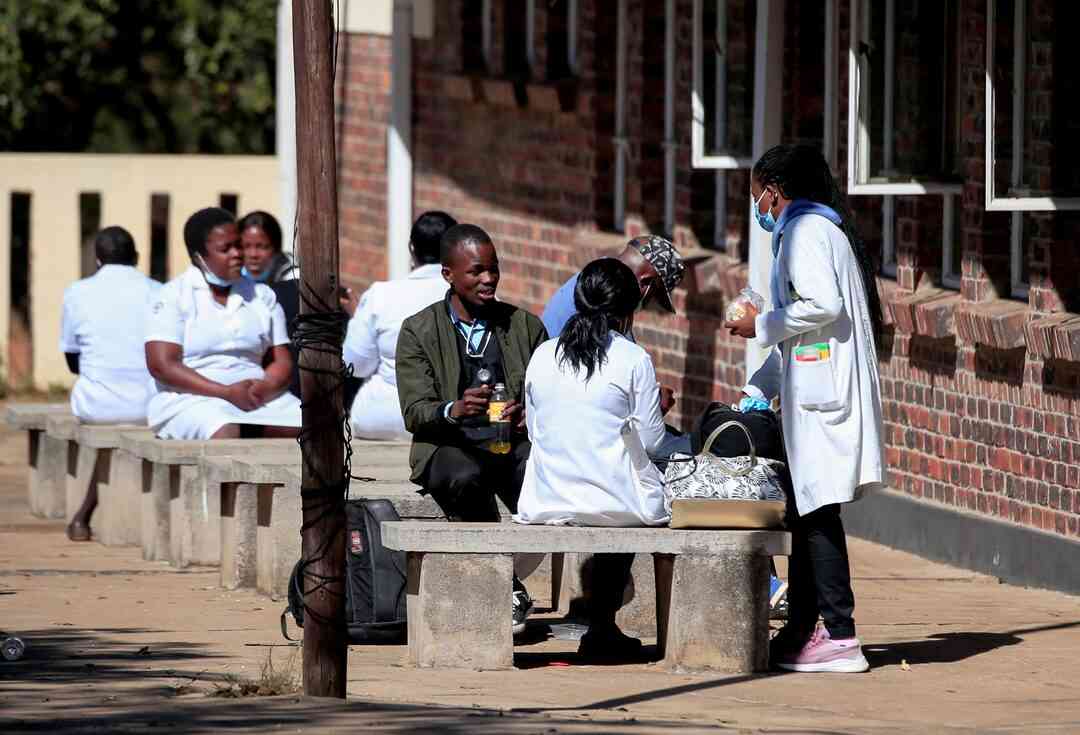
HARARE, May 15 (NewsDay Live) — Zimbabwe’s deputy health minister has drawn criticism after telling nurses during International Nurses Day commemorations that “only God” could adequately reward them, weeks after public sector nurses staged a strike over low pay and working conditions.
Deputy Minister of Health and Child Care Sleiman Timios Kwidini made the remarks on May 12 at The Avenues Clinic in Harare during an event attended by nurses, hospital executives, students and government officials.
“We were laughing the other day, discussing the industrial action by public health institution nurses,” Kwidini said in remarks broadcast by ZiFM Stereo News.
“We asked ourselves if there is anyone in this world with the capacity to adequately pay a nurse. A nurse cannot be paid by anyone, and only God can reward a nurse,” he said.
He added that government could not “break the bank” for nurses because of limited resources, but said their welfare would be “gradually improved”.
The remarks came less than a month after public sector nurses launched a three-day strike over salaries and deteriorating working conditions. Nurses say they earn between below US$300 and about US$500 a month after deductions and are demanding salaries of between US$600 and US$800.
Kwidini, a former registered nurse trained at Gweru General Hospital, became deputy minister in January 2024 after serving as ZANU-PF legislator for Chiwundura. He is widely reported to be the first nurse to hold a ministerial position in Zimbabwe’s health portfolio.
Zimbabwe’s public health sector has struggled for years with an exodus of nurses seeking better pay and conditions abroad. A World Bank public expenditure review showed annual nurse departures rose from 298 in 2018 to 576 in 2020, before reaching 1,176 in the first seven months of 2021.
- Tangled gets rave social media reviews
- Tangled gets rave social media reviews
- Chiwundura man rapes, stabs ex-girlfriend
- Chiwundura villagers embrace trachoma prevention programme
Keep Reading
The government has faced criticism from nursing organisations over delays in issuing verification letters required for nurses seeking employment overseas.
More than 6,000 nurses paid the Nurses Council of Zimbabwe US$300 each for verification documents needed for applications in countries including Britain, Canada and Australia, according to the Zimbabwe Nurses Association (ZINA). The union says many applicants have yet to receive the documents.
ZINA president Enock Dongo previously accused authorities of withholding the certificates while continuing to collect fees.
Kwidini told the Senate last year that funds collected for unprocessed applications had been ring-fenced and that refunds had been made in some cases. He later announced that verification letters would first be issued to nurses who had completed at least 15 years of service.
The deputy minister’s remarks also came days after social media videos from Parirenyatwa Group of Hospitals sparked debate over the treatment of nurses.
The footage showed nurses dancing at a hospital commissioning event attended by Tinotenda Tungwarara, daughter of presidential investment adviser Paul Tungwarara, who handed out US$100 notes to some participants.
Critics said the event reduced poorly paid health workers to a spectacle, while others defended the nurses, arguing the cash rewards reflected the financial pressures they faced.
Referring to the incident, Kwidini said nurses should avoid dancing in uniform because it undermined their dignity.
Zimbabwe’s health ministry has repeatedly said limited funding constrains its ability to improve salaries and working conditions.
The Ministry of Health and Child Care requested ZWL$85.3 billion for its 2026 budget but Treasury allocated ZWL$24.19 billion, according to parliamentary evidence presented by Permanent Secretary Aspect Maunganidze.
Zimbabwe has also consistently fallen short of the African Union Abuja Declaration target requiring governments to allocate at least 15% of national budgets to health.