THERE is something worrying about Harare: both the city and the central government are allergic to transparency and accountability, especially in multi-million or multi-billion-dollar deals.
The projects are always shrouded in secrecy and the costs always highly inflated.
Early this week, Zimbabweans woke up to the news that the capital, at long last, was introducing a light train service to ease congestion, improve commuting time and above all going green.
This was welcome news to many commuters in the metropolitan council.
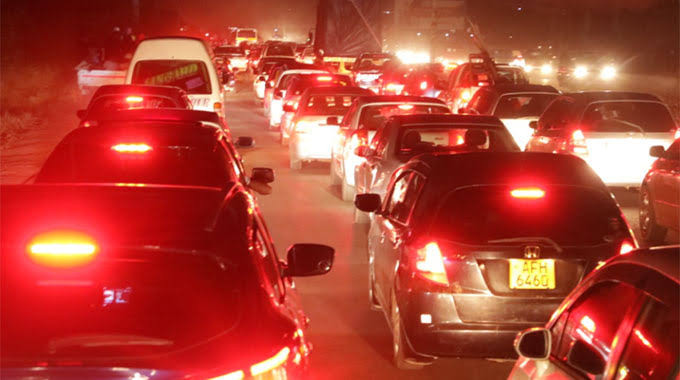
Anyone who knows Harare is aware of the chaos along Samora Machel West every rush hour, so is the congestion along Seke Road or Mutare Road to Mabvuku.
These people need relief and they need it like yesterday, not tomorrow because that would be too late.
The State media told us that the government has approved the ambitious US$3 billion Harare light rail project.
The project is a modern mass transit system that will connect the central business district with major suburbs, Chitungwiza, Robert Gabriel Mugabe International Airport and the new city in Mt Hampden.
- Over 115 to exhibit at Mine Entra
- Byo armed robber in court
- Young entrepreneur dreams big
- Woman jailed 12 years for indecent assault
Keep Reading
Let’s pause for a moment.
City of Harare says it will introduce a US$3 billion light rail train that would be operational by 2029.
That would be exactly two and a half years from now.
But is the cost reasonable? No.
It is not and the subsequent paragraphs would demonstrate why.
In Africa, two countries have large light rail projects: Ethiopia (Addis Ababa) and Morocco (Casablanca and Rabat).
Kenya is also improving its national railway structure using the standard gauge railway and South Africa has the high-speed Gautrain service.
The Addis Ababa light rail is a total 34km and was done to improve transportation in the Ethiopian capital.
It was implemented by China Railway Group, a China State-owned company.
The project was implemented at a total cost of US$475 million.
The Casablanca light rail is 80km long and covers over 130 stations.
It was implemented at a total cost of US$828 million.
More importantly, the fare on the rail is around US$0,80 (80 cents).
On the other hand, the Rabat-Sale tramway, which is 27km long with 43 stations, was implemented at a total cost of US$475 million.
This line connects major university campuses, hospitals, administrative centres and railway stations.
It carries over 160 000 passengers every day.
Morocco is still implementing expansion of the light rail networks as part of a broader urban mobility projects and in preparation for co-hosting the 2030 Fifa World Cup, with further extensions planned across both metropolitan areas.
In South Africa, the Gautrain is an 80-kilometre rapid rail and express commuter network in the Gauteng province.
It seamlessly connects Johannesburg, Pretoria, and O.R. Tambo International Airport, operating at speeds up to 160 km/h to bypass heavy traffic congestion.
It was implemented at a total cost of US$3,5 billion.
The Gautrain also runs a dedicated fleet of Gautrain buses to shuttle commuters to and from surrounding neighbourhoods.
In all the cited examples, the projects were implemented transparently and many companies did bid.
The bidding system made it possible to have a competitive project cost and implementing time frames.
Let’s turn to what Harare said about the light rail project.
The city acting director of town planning Samuel Nyabeza said the project will be completed within five years.
“The project has already been approved by Zida [Zimbabwe Investment and Development Agency] and has been accorded National Project Status. It is being spearheaded through a partnership involving government, local authorities and private sector players,” Nyabeza said.
“The investor is currently mobilising approximately US$5 million required for project preparations, with funding support expected from the African Development Bank.”
It is important to note that the rail project was put into the public sphere for the first time on Sunday, yet already it has an investor.
An investor whose joining was not clearly spelt out or chosen transparently.
The investor remained anonymous.
Zimbabweans have seen this before.
GeoPomona got a waste management contract in the same manner.
Helcraw got the prepaid water metering contract.
They were both multi-million projects.
They were never tendered.
The total cost to the residents/ratepayers was never divulged.
The Harare light rail project details are scant.
No one knows how many kilometres it will cover or which are its main connections.
How will it be useful to residents if it does not get close to hospitals or colleges or specific industries where the residents work?
It remains clear that similar projects across the continent were far cheaper.
Yes, it is admitted that these projects were done earlier and the costs could not have been this high, but factoring inflation and probably the topology but it’s still high.
Ethiopia has many hills.
Morocco ha many bridges and underground tunnels.
The Gautrain has many tunnel sections, especially in central Johannesburg.
It should be noted that Gautrain is a high-speed rail network with speeds of up to 160km per hour.
Harare will have a light rail.
The reality of the matter is Zimbabwe has experienced a lot of inflated pricing.
During the COVID-19 period, the government bought buses at four times their official cost for urban transportation.
However, six years later, the buses cannot be seen on Harare’s roads or any other urban centre.
More importantly, the purchase of the buses was never tendered.
It has to be stated, Harare in the dual sense alluded to earlier deliberately breaches constitutional principles of public finance management.
Section 298(1)(a) says there must be transparency and accountability in financial matters.
On procurement the constitution [s315(1)] in its own words says: “An Act of Parliament must prescribe procedures for the procurement of goods and services by the State and all institutions and agencies of government at every level, so that procurement is effected in a manner that is transparent, fair, honest, cost-effective and competitive.”
Harare needs light rail network, but it should be done in a transparent, fair, honest, cost effective and competitive.
On my last reading of the Constitution, this section has not been amended and Harare should follow it.
I’m out!
- Paidamoyo Muzulu is a journalist based in Harare. He writes here in his personal capacity.