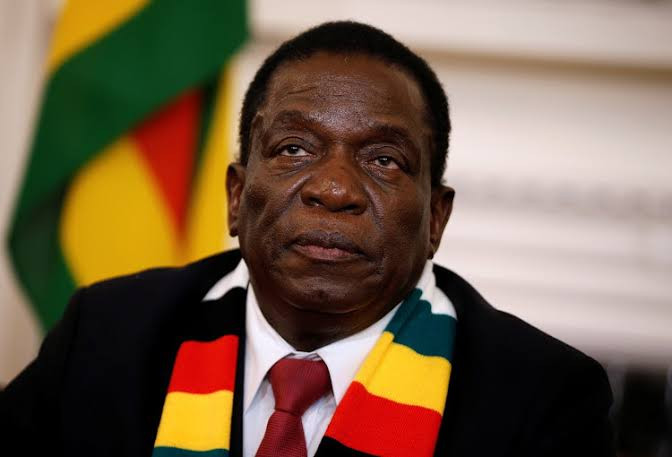
PRESIDENT Emmerson Mnangagwa, soon after his 2017 inauguration, told Zimbabweans that his government will operate on the mantra “Zimbabwe is open for business”.
His Finance minister, Mthuli Ncube, added that the economic policies would now be guided by the interests of capital.
It never occurred to the majority the two meant the State would sanction slave wages.
The two quickly moved to implement austerity measures without putting safety nets for the working poor, unemployed and vulnerable groups.
Many gainfully employed lost their jobs and many others, across all sectors, had their nominal salaries reduced.
Many across the public sector had their salaries reduced from US$540 to anything between US$300 and US$400.
Many thought this was a passing phase and soon salaries and wages would be back to normal real salary increments after removing inflation.
This turns out it was only a dream that is slowly turning into a nightmare.
- Chamisa under fire over US$120K donation
- Mavhunga puts DeMbare into Chibuku quarterfinals
- Pension funds bet on Cabora Bassa oilfields
- Councils defy govt fire tender directive
Keep Reading
The Mnangagwa regime this week moved to consolidate State sanctioned slavery when it announced the minimum wages for domestic workers.
In the regime’s words, it said: “Cabinet noted and approved the review of minimum wages and related conditions of employment for domestic workers and workers in unclassified operations.”
It added: “Accordingly, the minimum wage for workers in unclassified operations is henceforth pegged at US$270 payable in local currency. The minimum wage for domestic workers will be US$90.”
There is something interesting about the minimum wage in a multi-currency regime, US$270 paid in local currency shrinks to US$212 in reality.
It is a reality that the central bank has acknowledged: over 80% of transaction take place in US dollars.
It is, therefore, bad labour practice to pay people in a currency they cannot use to transact freely.
Zimbabwe is a dollarised economy, but let’s us still use the government’s figures in Zimbabwe Gold (ZiG).
The Zimbabwe National Statistics Agency (ZimStat) has interesting figures on total consumption poverty line.
“The minimum income needed for an individual to afford both basic food and non-food items — stands at ZiG1 312,17 per person per month. For a typical family of five, this amounts to a monthly cost of living of approximately ZiG6 560,” ZimStat says.
In reality, domestic workers are receiving merely a third of what they need to meet their food needs.
A simple calculation using the rate of US$1:ZiG26 means domestic workers receive less than ZiG2 350 per month.
Let’s turn to international bodies such as the World Bank.
The bank says for any person to be out of extreme poverty, they need at least US$3/day.
For a family of five, it jumps to US$15/day.
With a typical month of 30 days, the figure soars to US$450.
Let this sink: anyone taking home less than US$450 is living in extreme poverty, according to the World Bank.
The reality is in a cash economy like Zimbabwe, where most services are pre-paid, falling sick among the poor is a death sentence, education is a luxury for the middle and rich classes and commuting is expensive, hence many travel to work at the back of open trucks or lorries.
We should dig further and see what is the Zimbabwe labour market like.
Zimbabwe’s unemployment rate stands at 9,3%.
This figure has to be contextualised.
Zimbabwe uses a unique definition of unemployment.
If a person is a vendor or is temporarily hired to trim lawn or wash a car, they are considered employed.
Using such a wide definition, nine in ten Zimbabweans are employed. A absurd as it sounds, let’s for a moment accept it and look at what one gets out of that.
Over 90% of these workers have no pension or medical aid.
They don’t have decent accommodation and cannot feed their families.
The Mnangagwa regime sees nothing bad with the situation.
Actually it wants to be applauded for increasing minimum wage to US$90/ month.
While it is settled that the minimum wage does nothing to take the workers even an inch out of extreme poverty, not even poverty, the State finds it comfortable to tax these people.
They have to pay their value-added tax and the mobile money transfer tax.
The regime is a vampire state.
No other words can describe such a regime that sees itself as successful and delivering for the people, yet they are still swimming in extreme poverty according to World Bank standards.
The majority of the so-called employed Zimbabweans are in the informal market.
There are no minimum wages or safety regulations in the sector.
However, the regime proudly calls them workers and has an appetite to tax them, nay bleed them.
All the gloss statistics of a country developing and making strides towards an upper middle-income economy by 2030 mask the reality of the working poor.
We have the equivalent of the feudal servants, slaves.
To make matters worse, these are State-sanctioned slave wages.
This is a dangerous phase in our politics.
It is a political keg waiting to explode.
How can the state conspire to enslave its citizens?
Why would the state happily go to bed with capital?
The answers are not shocking as they should.
The regime is a double-headed Janus.
It speaks with a forked tongue and now mistakenly considers itself part of the capital, even though most of them are middle-men.
The dark clouds are rising on the horizon.
The State is creating a hungry man, a man who certainly soon will realise he has nothing to lose and his supposed protectors have conspired to sell him as a slave to capital.
The working class have no option, but organise to fight slavery.
They have nothing to lose except the chains.
I’m out!