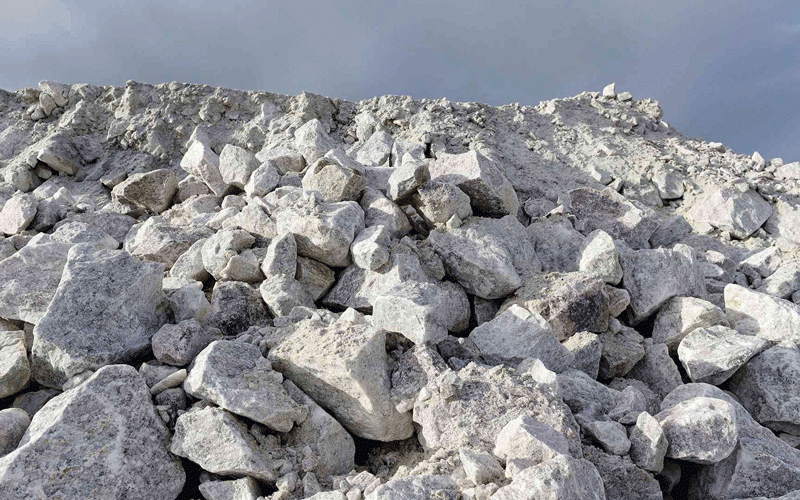
THE recent policy changes in Zimbabwe’s mining sector, which classify 14 minerals, including lithium, cobalt, graphite, rare earth elements, platinum group metals (PGMs) and others as “critical” and introduce requirements for local processing as well as mandatory State participation, reflect a broader trend across Africa.
Resource-rich countries are increasingly seeking to ensure that their mineral wealth generates tangible domestic benefits rather than simply serving as export commodities.
These measures are intended to strengthen national control over “critical, strategic and special” resources, enhance beneficiation and local value addition, and promote industrialisation.
From resource extraction to value addition
Zimbabwe’s new mining policies represent a shift from traditional resource extraction towards a more integrated approach that links mining, processing and industrial development. Key policy tools include mandatory minimum State ownership through special purpose vehicles (SPVs), restrictions on exporting unprocessed minerals and requirements for local beneficiation and workforce localisation. Together, these measures aim to achieve three objectives:
lRedistributing mining revenue to increase direct national benefits.
lStrengthening domestic value chains by encouraging local processing and industrial activity.
lAligning corporate behaviour with national priorities, such as local employment, infrastructure development and environmental management.
- Mavhunga puts DeMbare into Chibuku quarterfinals
- Bulls to charge into Zimbabwe gold stocks
- Ndiraya concerned as goals dry up
- Letters: How solar power is transforming African farms
Keep Reading
Such policies illustrate an important principle: resource development is no longer simply a commercial transaction. It is increasingly entwined with national strategy, industrial policy, and long-term development objectives.
Chinese investment and the industrialisation agenda
Chinese companies operating in Zimbabwe have already begun contributing to this vision of industrialised mineral development. For instance, Dinson Iron and Steel has deepened Sino-Zimbabwean economic co-operation by extending value chains, creating local employment, and supporting community development projects. Similarly, Huayou successfully shipped the first batch of lithium sulfate from its Zimbabwean project in April, marking the transition from construction and commissioning to stable production. Huayou has become the first Chinese company to achieve localised lithium sulfate production in Zimbabwe, demonstrating the potential for overseas companies to integrate mining and processing in alignment with host country priorities.
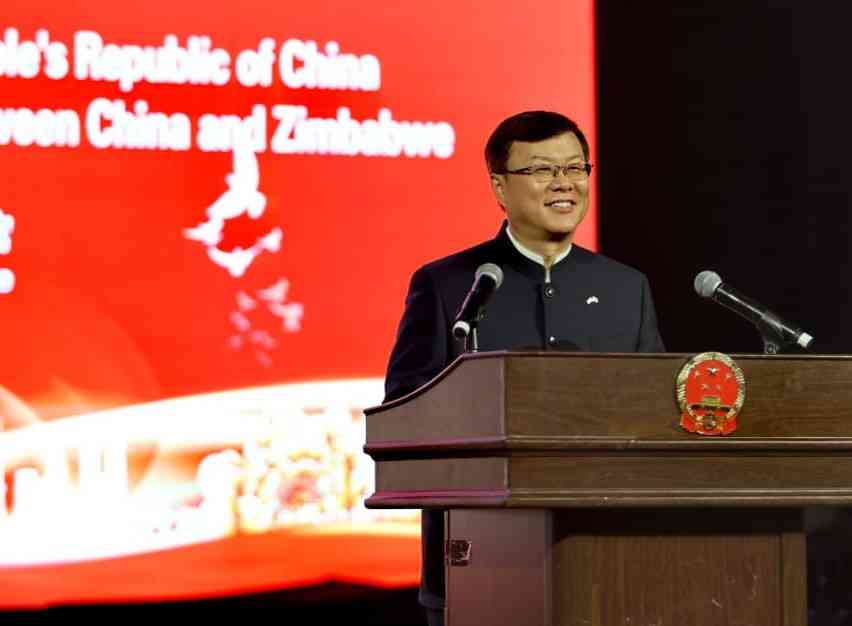
These examples show that foreign investment can do more than extract raw materials; it can actively contribute to industrialisation, technology transfer and sustainable development. At the same time, realising this potential depends on supportive policies from the host government. As Chinese ambassador to Zimbabwe Zhou Ding has noted, aligning China’s “15th Five-Year Plan” with Zimbabwe’s National Development Strategy 2 can help to accelerate industrial upgrading and attract further investment. Policy continuity and predictability are essential for fostering the patient capital that long-term industrial projects require.
Policy stability matters for long-term development
Sustainable development in the mining sector is a joint responsibility of investors and the government. Companies must continue to prioritise environmental standards, local employment, skills training, and community engagement. Governments, on the other hand, must provide a stable, transparent and predictable policy environment. Mining and industrial projects involve substantial upfront investment and long payback periods; unpredictability in regulations or enforcement can undermine both investor confidence and long-term developmental outcomes.
Ultimately, the debate over Zimbabwe’s critical minerals should not be framed simply as a question of ownership or geopolitical influence. The more meaningful measure is whether mining activities generate lasting benefits for local communities, support broader industrialisation, and contribute to national development goals. By fostering co-operation between investors, government and communities, Zimbabwe can ensure that its critical minerals serve as a foundation for economic diversification, technological advancement and improved livelihoods.
- ZHOU Jinyan is an associate professor at Shanghai Academy of, Shanghai International Studies University. Tungamirai Eric Mupona is PhD candidate at School of Public Affairs, Zhejiang University.