The defining soundtrack of Zimbabwe’s urban commute is the sharp hiss of air brakes, the rumble of internal combustion engines (ICE) and the loud calls of conductors loading passengers into commuter omnibuses.
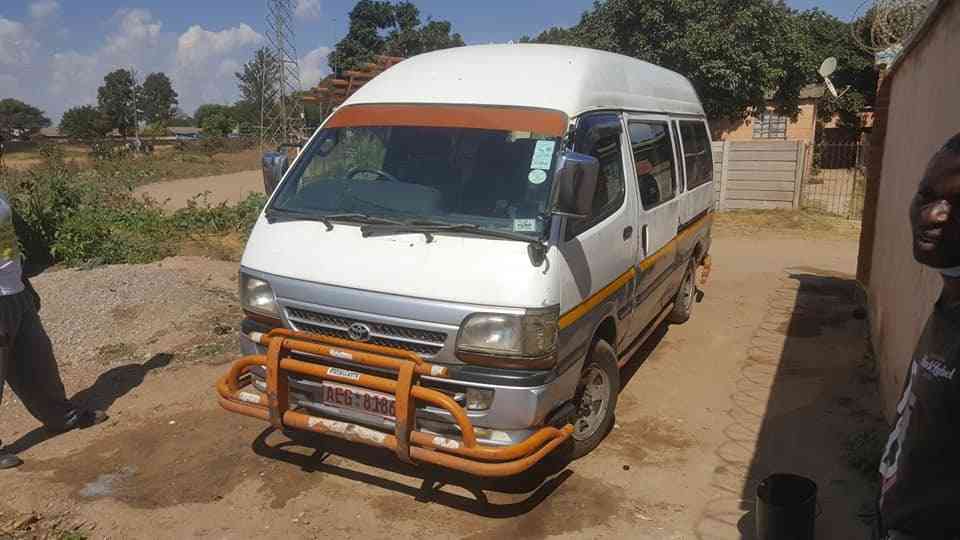
For decades, the public transport sector has been fiercely dominated by two Japanese automotive titans, the Nissan Caravan and the Toyota Hiace.
Modified locally to squeeze in up to 18 passengers per single trip, these petrol and diesel-powered kombis form the absolute backbone of local transit.
However, as global automotive trends pivot drastically toward green energy, an existential question has loomed over the Fourth Street, Copacabana and Mbare Musika interchanges regarding whether the local transport sector will genuinely embrace Electric Vehicle (EV) technology or stick to the tried-and-tested ICE kombis.
Recent market developments, fiscal shifts and engineering realities suggest that while an EV revolution is no longer a distant dream, the internal combustion engine will not be unseated without a long, gritty fight.
On paper, the operational physics and economics of electric mobility heavily favor mass transit.
The Central Mechanical Equipment Department (CMED), a state enterprise actively piloting a fleet of over 40 electric vehicles, including 22-seater electric mini-buses and luxury coaches, recently dropped a fiscal bombshell at a national energy expo.
According to CMED, running an electric mini-bus from Harare to Bulawayo, a distance of roughly 400 kilometres, on a full charge costs approximately US$25 worth of electricity.
- Chamisa under fire over US$120K donation
- Mavhunga puts DeMbare into Chibuku quarterfinals
- Pension funds bet on Cabora Bassa oilfields
- Councils defy govt fire tender directive
Keep Reading
In stark contrast, a diesel Toyota Hiace or Nissan NV350 covering the same distance consumes between 40 to 50 litrs of fuel, costing operators anywhere between US$65 and US$80 at current pump prices.
A CMED official noted during an exhibition of their solar-powered 100% electric fleet that there is no need for fuel, as the only drink the car needs is water for the air conditioning.
Furthermore, Chinese automotive giants like BYD (Build Your Dreams) have established a formal footprint in Zimbabwe, introducing cutting-edge transit technology like the ultra-safe blade battery system.
For an industry operating on razor-thin margins where every single dollar counts, slashing daily running costs by over 60% and eliminating routine mechanical headaches like oil filters, timing belts and spark plugs presents a massive competitive advantage.
Recognising the country's massive lithium reserves and the heavy foreign currency burden of importing liquid fossil fuels, the government has moved swiftly to tilt the scales through aggressive policy changes.
Customs duty on fully electric passenger and commercial transport vehicles was slashed from 40% down to 25%, while traditional ICE vehicles continue to face the higher 40% penalty.
To bypass the country's grid challenges, the government also introduced a complete duty rebate on solar-powered EV charging equipment imported by approved operators.
Despite the massive savings on fuel, the rank-and-file kombi owner, the individual operator running a single older Nissan Caravan or a Toyota HiAce, is highly unlikely to ditch their internal combustion engine anytime soon because the reality on the ground boils down to three key factors.
The first roadblock is the high initial capital cost, as a clean, durable used import Nissan Caravan NV350 or an older Toyota HiAce can be secured from Japan or South African bonded warehouses for between US$7 000 and US$19 000.
Conversely, a brand-new electric minibus or commuter omnibus from suppliers like BYD requires an upfront capital investment often exceeding US$30 000 to US$40 000, presenting a massive barrier to entry for informal transport operators lacking access to formal bank financing.
The second major hurdle involves infrastructure and the charging bottleneck.
An 18-passenger kombi makes its money through constant rotation and cannot afford to sit idle.
While a Toyota Hiace can pull into a service station and fill up with diesel in less than three minutes, an electric kombi requires dedicated fast-charging infrastructure.
Although CMED has begun deploying solar-charging hubs in Harare and Victoria Falls, the national infrastructure network is still in its infancy and the country's erratic power grid means that relying on standard AC charging overnight is a gamble that operators, who risk losing an entire day's earnings if a vehicle isn't fully charged by 5:00 AM, are hesitant to take.
The final constraint is the deeply entrenched secondary market and mechanics ecosystem.
From Gazaland in Highfield to Magaba in Mbare, there is a vast informal ecosystem of mechanics, scrap yards and spare parts dealers dedicated entirely to keeping Toyota and Nissan ICE engines running.
If a Toyota Hiace snaps a component or needs a quick gearbox overhaul, it can be fixed within hours using affordable, readily available parts, whereas a complex high-voltage EV battery or an electric drive inverter requires specialised diagnostic tools and certified technicians that the informal sector currently lacks.
Ultimately, while the transport sector will embrace EVs, it will not be an overnight replacement, resulting instead in a two-tiered transport ecosystem over the next decade.
Large corporate fleets, state enterprises like CMED and institutional shuttles will aggressively transition to electric mini-buses to capitalise on government tax incentives and massive fuel savings.
However, the informal 18-seater commuter ranks will stubbornly stick to their internal combustion Nissan Caravans and Toyota HiAces.
For the average kombi owner, the liquid-fueled engine remains an affordable, fixable and fiercely reliable tool of survival, meaning that until the secondary market for used electric commercial vans matures and solar fast-charging stations become as common as fuel pumps, the roar of the ICE engine will remain the dominant sound on Zimbabwean roads.