In my last article, Skills Over Certificates: The Only Path for Zimbabwe, I laid out the case for rebalancing our education system toward practical, income-generating skills. The response was strong—supportive, critical and, most importantly, engaged. But one crucial question keeps emerging:
Even if we train people with the right skills, where will the jobs come from?
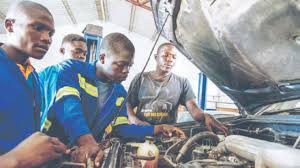
This is where the conversation must deepen. Skills alone are not enough. Training a welder without a welding industry, a mechanic without a functioning transport economy, or an agricultural technician without agro-processing capacity simply shifts unemployment from the classroom to the workshop.
Zimbabwe does not just have a skills gap. It has an industry gap.
For years, we have treated education reform and economic development as separate conversations. They are not. They are two sides of the same coin. A country must train for the economy it has—and deliberately build the economy it wants.
The next phase of reform must therefore focus on aligning skills development with industrial growth.
We must begin by identifying priority sectors where Zimbabwe has a natural advantage. Agriculture is the obvious starting point—but not in its raw form. The future lies in value addition: processing, packaging and exporting finished or semi-finished goods. This requires technicians, machine operators, quality controllers and logistics specialists. Skills training must feed directly into these value chains.
Infrastructure development must also become both a training ground and an employment engine. Every road built, every dam constructed, every housing project launched should double as a live classroom. Contractors must be required not only to deliver projects, but to train and absorb local apprentices. Development without skills transfer is a missed opportunity.
- Rhodesia vs Zim: The genesis of education sector crisis
- Village Rhapsody: Pay teachers a living wage
- Rhodesia vs Zim: The genesis of education sector crisis
- Village Rhapsody: Pay teachers a living wage
Keep Reading
We must also deliberately support small and medium enterprises (SMEs). In many economies, SMEs are the largest employers. In Zimbabwe, however, they are often undercapitalised, informal and disconnected from structured training systems. If we link vocational training centres with SME incubation hubs—providing tools, workspace, mentorship and access to finance—we can create a pipeline from training to production.
Access to capital must be fixed. This is where many good ideas die. A skilled young person with a viable business idea should not be stopped by lack of funding. Microfinance institutions, development banks, and even pension funds must be mobilised to support productive enterprises—not just consumption. Tools, equipment and startup capital are as important as the training itself.
We must also leverage the diaspora. Zimbabwe has thousands of skilled professionals and tradespeople living and working abroad. They represent not just remittances, but knowledge, networks and investment potential. Structured programmes can encourage skills transfer, partnerships and even remote mentorship for young entrepreneurs back home.
Finally, we must measure success differently. For too long, we have measured progress by enrolment numbers and graduation rates. Instead, we should be asking: How many jobs have been created? How many businesses started? How many livelihoods sustained? Education must be judged by outcomes, not inputs.
This is how we move from theory to impact.
Because the real goal is not just to produce skilled individuals. The goal is to build an economy that absorbs, rewards and multiplies those skills.
Zimbabwe does not lack talent. It lacks alignment.
If we get this right—if we connect training to industry, education to production, and skills to opportunity—we will not just reduce unemployment. We will unlock a generation.
And that is how nations rise.