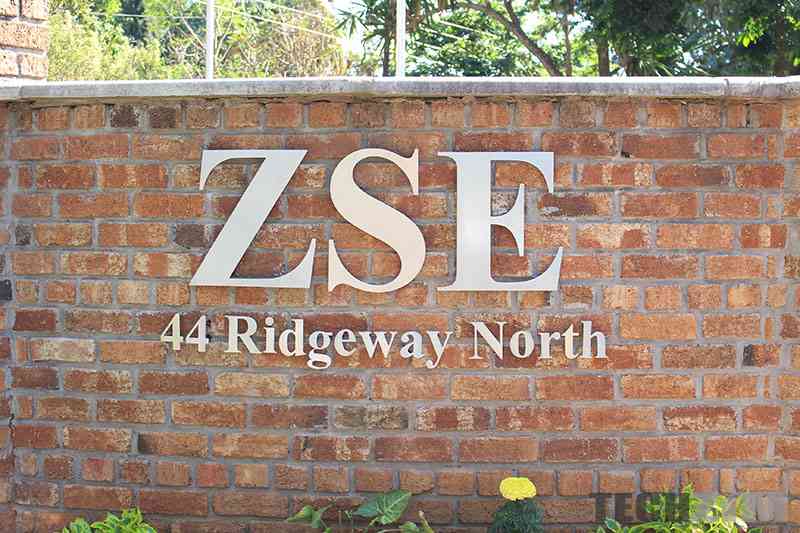
The trading floor of the Zimbabwe Stock Exchange (ZSE) at 44 Wall Avenue has always been a barometer of the national mood.
But today, that pulse is faint.
The trading floor is no longer a hive of activity, it has taken on the stark silence of a library
The trading witnessed in today’s session isn't just a mid-year collapse, it is the visible scar left by the departure of Econet Wireless Zimbabwe.
When the telecommunications giant officially delisted on March 31, it didn't just walk out the door, it took approximately 35% of the exchange’s market capitalization with it.
For nearly three decades, Econet was the anchor counter that provided the ZSE with its pulse.
Today’s turnover data paints a grim picture of the aftermath. With Econet gone, the burden of liquidity now rests almost entirely on Delta Corporation, Hippo Valley, and OK Zimbabwe.
"If the shareholders approve the delisting, it means the platform hasn't met their expectations," ZSE CEO Justin Bgoni noted recently.
- Tarakinyu, Mhandu triumph at Victoria Falls marathon
- BCC, HCC adopt results-based ambulance services
- Water rationing looms in Bulawayo
- Building narratives: Chindiya empowers girls through sports
Keep Reading
It’s a candid admission. Econet cited chronic undervaluation as its primary reason for leaving, arguing that its ZSE valuation represented less than 20% of its intrinsic value compared to African peers.
By migrating its infrastructure assets (Econet InfraCo) to the USD-denominated Victoria Falls Stock Exchange (VFEX) and moving its mobile operations to an over-the-counter (OTC) platform, Econet has essentially firewalled its value from the volatility of the local currency, the ZiG.
The ZSE is facing a structural exodus. Econet is merely the largest domino in a line that includes First Mutual Properties, Khayah Cement, Truworths, and NTS.
While the ZSE struggles to find a new news peg the VFEX is thriving. In 2025, the VFEX All Share Index surged by 70%, attracting mining and infrastructure giants looking for stable, USD-denominated capital.
Furthermore the real casualty of this migration isn't found in the boardrooms, but in the bank accounts of Zimbabwe’s civil servants.
For years, teachers, nurses, and small-scale savers used Econet shares as a reliable inflation hedge.
Now, those retail investors find themselves holding OTC shares.
Unlike the ZSE, where one could sell shares with a click, the OTC platform via VFEX offers significantly reduced liquidity.
Many retail investors lack the USD-denominated bank accounts required to trade effectively on the VFEX.
Wealth that was once "liquid" is now effectively "frozen" in a complex OTC structure that favors institutional brokers over the person on the street.
As the Securities and Exchange Commission of Zimbabwe (SECZim) reviews the fallout, the question remains: Can the ZSE recover?
Without a massive influx of new listings to replace the 35% vacuum, the exchange risks becoming a ghost bourse a place where prices are quoted, but volume is a memory.
To bridge this gap, we will be reaching out to Bgoni for a status update on the ZSE's recovery roadmap and asking independent analysts if Delta the last true heavyweight is also feeling the undervaluation itch.