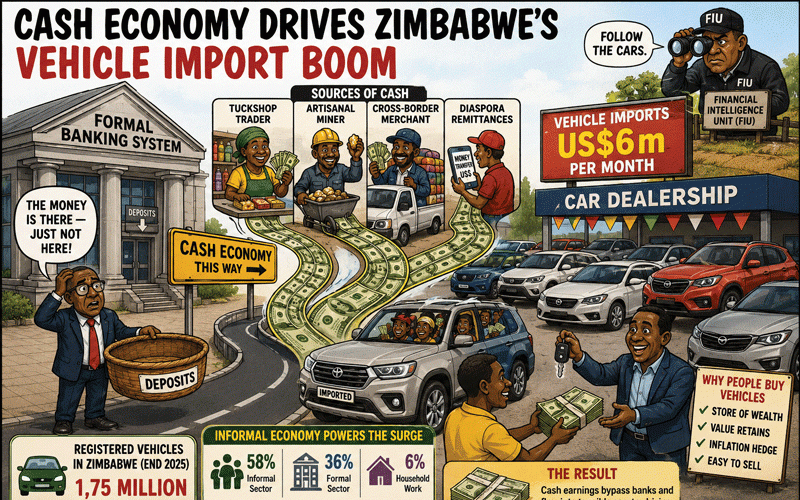
THE surge in imported vehicles flooding Zimbabwe's roads is being celebrated in some quarters as evidence of economic activity and rising prosperity. The growing number of cars entering the country is not a sign of confidence in the economy. It is a vote of no confidence in Zimbabwe's financial system and a damning indictment of government's failure to formalise the economy.
For years, authorities have preached financial inclusion, tax compliance and economic formalisation. Yet the reality on the ground tells a very different story. Millions of Zimbabweans continue to operate outside the formal economy, conducting business in cash and keeping their wealth beyond the reach of banks and regulators.
The reason is simple: they do not trust the system.
When informal traders, artisanal miners, cross-border merchants and countless other cash-rich operators choose to park their money in vehicles rather than bank accounts, they are making a rational economic decision. They are protecting themselves against a financial system they view as unreliable, unpredictable and incapable of safeguarding their savings.
This should deeply worry policy-makers.
A healthy economy channels savings through banks, where capital can be mobilised for productive investment. Zimbabwe's economy is increasingly channelling wealth into depreciating assets sitting in driveways and car parks, under the mistaken belief that this constitutes wealth creation.
It does not.
It is capital flight in another form and the consequences are severe.
- Mavhunga puts DeMbare into Chibuku quarterfinals
- Bulls to charge into Zimbabwe gold stocks
- Ndiraya concerned as goals dry up
- Letters: How solar power is transforming African farms
Keep Reading
Government is losing vast amounts of potential tax revenue as economic activity migrates into the shadows. Every transaction conducted outside formal channels weakens the State's capacity to raise revenue, plan effectively and deliver public services. The result is a shrinking tax base supporting an ever-growing burden of expenditure.
This helps to explain the recent blitz on high-end vehicles by tax authorities. Regulators know that a significant volume of economic activity is taking place beyond the reach of formal oversight.
There are also legitimate fears that the explosion of cash transactions is creating ideal conditions for illicit financial flows. Not every cash buyer is a criminal, but an economy awash with untraceable money inevitably attracts money laundering, tax evasion and other forms of financial abuse. Regulators may tighten enforcement, but they will be treating symptoms while ignoring the disease.
The deeper problem is trust — or rather, the absence of it.
Zimbabweans have not forgotten the devastating losses caused by currency collapses, policy reversals and financial instability. They remember waking up to find their savings wiped out, investments destroyed and carefully accumulated wealth reduced to nothing. Those scars remain fresh.
Government may blame the informal sector for resisting formalisation, but it is government policy that created much of the mistrust driving people away from formal institutions in the first place.
This is why the current obsession with enforcement misses the point. No amount of regulation, surveillance or coercion will force people into the banking system if they believe their money is safer elsewhere. Trust cannot be demanded. It must be earned.
The push towards a mono-currency regime may improve transaction visibility, but it will not automatically restore confidence. Citizens will not abandon cash simply because the government tells them to. They will do so only when they are convinced that policies are consistent, property rights are secure and the value of their savings will not be sacrificed at the altar of policy expediency.
The vehicle import boom is, therefore, a flashing red warning light.
It signals an economy where citizens trust cars more than banks, tangible assets more than financial institutions and personal survival strategies more than government policy.
That should alarm every policy-maker.
The tragedy is that authorities may once again mistake the symptom for the solution. More taxes, more regulations and more crackdowns will not address the underlying problem. Until the government restores credibility, confidence and predictability, money will continue to flee the formal system.
Zimbabwe's roads are filling up with imported vehicles. But beneath the traffic lies a far more troubling reality: a nation that has lost faith in institutions meant to safeguard its economic future.
That is not a sign of progress.
It is a warning of systemic failure.