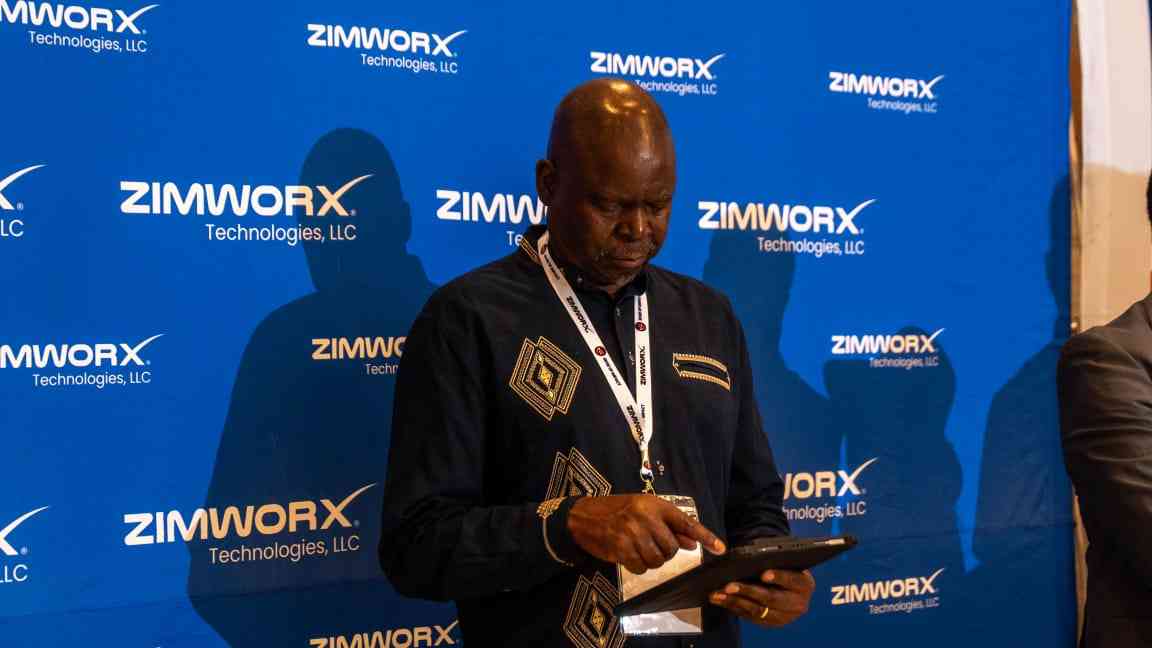
VICTORIA FALLS, Aug. 2 (NewsDay Live) — More than 60 global executives, policymakers, investors and technology leaders gathered in Victoria Falls for the inaugural Edge of Impact Conference, where speakers argued that Africa’s economic future will be shaped less by artificial intelligence itself than by the quality of leadership guiding its adoption.
Hosted by the American Chamber of Commerce Zimbabwe from July 22–24 under the theme “Leading the Frontier in AI and Cyber Security,” the three-day executive retreat brought together international and African business leaders seeking to position Zimbabwe as a hub for responsible AI, digital services and investment-led innovation.
A central message emerged repeatedly throughout the summit: technology alone will not transform African economies. Instead, leaders must build trust, strengthen governance, invest in skills and create organisations capable of making faster, smarter decisions in an increasingly compressed digital economy.
Former Springbok captain and 2007 Rugby World Cup winner Bob Skinstad drew parallels between elite sport and corporate leadership, arguing that high-performing organisations are built on trust, resilience and shared purpose rather than talent alone.
He urged executives to move beyond command-and-control management and embrace values-driven leadership that empowers teams and fosters long-term organisational performance.
Artificial intelligence strategist and former Google executive Ted Souder, now chief executive and co-founder of Quoin.ai, described AI as the most significant business transformation opportunity of this generation.
“This is not a technology conversation. This is a leadership conversation,” Souder told delegates, warning that many organisations fail because they deploy AI without preparing their people, governance structures and operating models.
He introduced the concept of “The Great Compression,” arguing that decision-making cycles are shrinking rapidly as information becomes instantly accessible, market conditions change within hours and competitive advantage increasingly depends on organisational agility rather than accumulated knowledge.
- Kim Jayde revels in SA award nomination
- Dawson pleased with Sables’ progress
- Kim Jayde revels in SA award nomination
- Sables ace Mudariki in French renaissance
Keep Reading
Souder challenged Zimbabwe to pursue a distinctive regional position by becoming Africa’s most trusted AI market, built on ethical deployment, strong governance and meaningful human oversight.
Rather than replacing workers, he said, AI should be used to enhance human capability, improve productivity and create new economic opportunities across sectors including financial services, mining, agriculture, healthcare and business process outsourcing.
One of the conference’s major sponsors was ZimWorX, led by founder and chief executive J.W. Oliver Jr., who also chairs AmCham Zimbabwe. Through ZimWorX and SupportDDS, Oliver has championed Zimbabwe’s growing global business services and outsourcing sector, promoting skills development and international investment as AI reshapes the future of work.
The conference concluded with delegates agreeing that the countries and organisations most likely to prosper in the AI era will be those whose leaders embrace innovation, govern technology responsibly and equip people with the skills needed to drive Africa’s next phase of economic transformation.