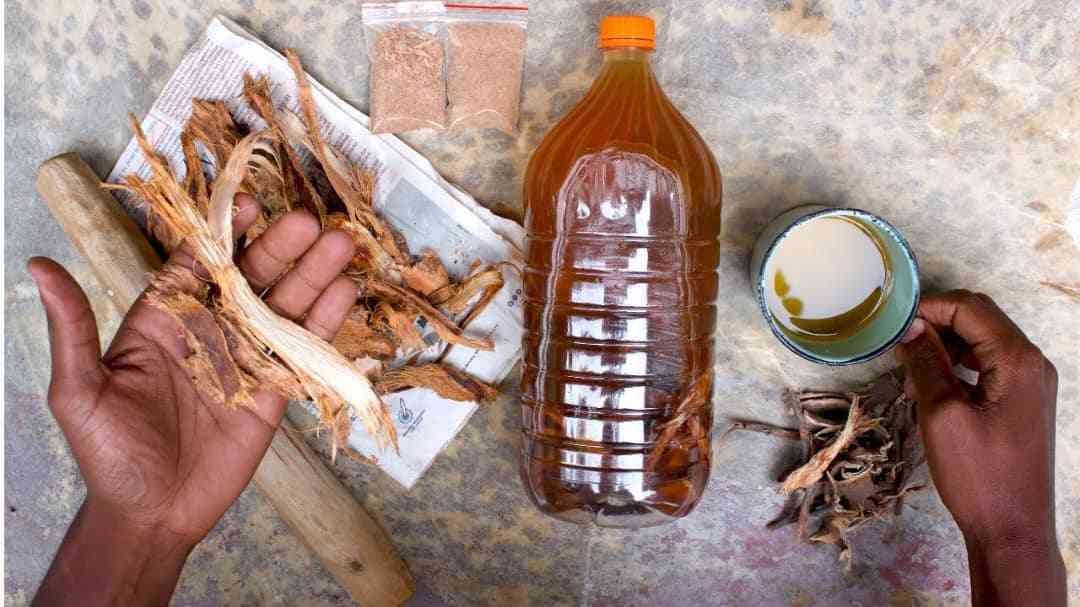
WALKING through the streets of Harare and other urban centres, it is hard to miss vendors selling colourful plastic bottles and containers neatly arranged on pavements.
Some are labelled as herbal creams, while others contain popular drinks commonly known as guchu — widely marketed as sexual enhancement remedies.
The majority of customers are men, drawn by the promise of improved libido and enhanced performance in the bedroom.
The belief is simple: these herbal concoctions can help one last longer.
However, science has yet to validate these claims.
This raises a critical question: how safe are these street-sold remedies?
To the vendors, the answer is straightforward — they insist their products can cure almost anything.
From stomach aches and skin problems to boosting energy levels, the claims are sweeping and, at times, unbelievable.
- Zim’s backyard pharmacies boom as economic crisis bites
- The bitter truth behind ‘guchu’ craze
Keep Reading
Affordability plays a major role in their popularity.
Compared to pharmaceutical drugs sold in registered pharmacies, these herbal products are significantly cheaper, making them accessible to a wide segment of the population.
“I have been selling guchu for about four years now,” said Tavonga Muke, a vendor at Mupedzanhamo market in Mbare, Harare.
“I now have regular clients who collect herbs and pay later.
“Most of my customers are men. I source the herbs from Malawi.
“I also sell herbs that treat heartburn, frequent urination, acid reflux and other conditions.”
Guchu itself is a traditional herbal drink that has long been associated with improving sexual performance.
Zimbabwe has a deep-rooted history of using medicinal plants to treat various ailments, a practice passed down through generations.
Another vendor, Mbuya Chakari, who travels across towns selling herbal products, confirmed that the demand is not limited to men.
“I have Kiwi tea for women, which they drink in the morning on an empty stomach. For men, I sell different herbs. I have Muzvomora kwayedza, Mut***do wegudo and muchemedza mbuya,” she said.
“These products sell very fast such that sometimes I even run out of stock.”
Despite the booming trade, not all users are convinced.
Mengezi Tshuma said he has tried some of the street herbs, but has not noticed any meaningful results.
Instead, he claims commercially packaged drinks such as Bhuru and Kombucha offer better outcomes.
However, health authorities are raising serious concerns.
The Medicines Control Authority of Zimbabwe (MCAZ) has made it clear that the sale and distribution of medicinal products — including traditional remedies like guchu — are strictly regulated under national law.
MCAZ public relations and communications manager Davison Kaiyo said the Medicines and Allied Substances Control Act governs the handling of all medicinal products.
“It is illegal for unlicensed individuals to sell or distribute medicines,” Kaiyo said.
“All such activities must take place within registered premises to ensure safety and quality control.”
He warned that individuals operating so-called “backyard pharmacies” or selling medicines on the streets were violating the law and may also fall under provisions of the Dangerous Drugs Act if controlled substances were involved.
MCAZ, working with the Zimbabwe Republic Police, has been conducting enforcement operations across the country, according to Kaiyo.
These operations involve confiscating illegal products and prosecuting offenders, with several arrests already recorded.
Medical experts echoed these concerns.
Prominent physician Johannes Marisa acknowledged that herbal medicine has long been part of Zimbabwean culture, but warned that safety remains a major issue.
“Herbs are often consumed as guchu, but these preparations usually have no standard dosage,” he said.
This lack of dosage control presents a significant health risk.
Unlike regulated medicines, where dosages are carefully calculated, herbal mixtures can vary widely in strength and composition.
The World Health Organisation has also cautioned against the common belief that “natural equals safe”.
While herbal remedies may be derived from plants, they are not automatically harmless.
“Many of these herbs have no scientifically proven medicinal value,” Marisa added.
“Unregulated substances can be dangerous. For example, a standard dose of amoxicillin is clearly defined.
“But with guchu, there is no way of knowing how much you are taking. You could easily overdose.”
Beyond dosage concerns, hygiene is another issue.
Many of these products are prepared and sold in unsanitary conditions, increasing the risk of contamination.
What begins as a search for a quick fix can easily turn into a serious health hazard.
While nature indeed offers powerful remedies, experts warn that without proper testing, regulation and quality control, these benefits can quickly turn into harm.
The growing popularity of guchu reflects deeper social and economic realities — limited access to affordable healthcare, cultural beliefs, and the demand for quick solutions.
However, it also exposes consumers to significant risks.
In the end, the bitter truth is clear: when medicine is sold on street corners without regulation, it can just as easily become poison as it can a cure.