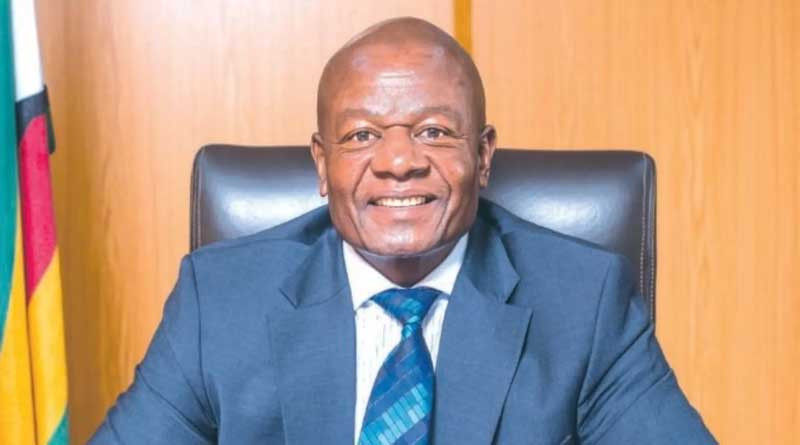
VICTORIA FALLS, Feb. 24 (NewsDay Live) – Private capital is ready to back Zimbabwe’s independent power producers (IPPs), but only if projects are bankable and policy risks are contained, Samuel Matsekete, group chief executive of Old Mutual Zimbabwe, has said.
Speaking at SADC Energy Week in Victoria Falls, Matsekete said the region’s power deficit presents a clear investment opportunity. However, long-term capital remains constrained by weak project structuring and shallow domestic savings pools.
“There are various issues that affect the extent to which we as financiers avail long-term and patient money and then aggregate it so that it can actually be scalable and support scalable projects — we still have areas that need to improve in that space,” he said.
He stressed that demand for energy finance exceeds supply.
“What looks sometimes as hesitation is actually reflecting a need to promote more long-term savings and therefore avail scale in the actual aggregation of the funds,” Matsekete said.
Institutional investors, including pension funds and insurers, view energy infrastructure as a viable asset class, but only where risk-adjusted returns are clear.
“These are institutional and investment funds that are looking for return,” he said. “You always look at the profile of the risk of the projects — you are looking at the returns themselves.”
While energy projects demonstrate strong social impact and public utility value, many IPPs fall short on commercial viability and risk mitigation.
- Power crisis: It can’t be business as usual
- Power crisis: It can’t be business as usual
- Directors move to tackle governance crisis
- Women demand financial sector overhaul
Keep Reading
“Often, they are lacking in terms of the commercial viability as well as the way that the projects are de-risked to attract private sector money,” Matsekete said.
Bankability, he added, depends on predictable cash flows, enforceable power purchase agreements (PPAs), policy stability and credible counterparties.
He cited a green bond issued by the Zambia Copperbelt Energy Corporation as a regional example of how structuring can unlock capital. The company sought US$150 million but was oversubscribed, raising about US$200 million.
“They were oversubscribed,” Matsekete said. “When you study that example, you will see that the participants were pension funds and institutional investors from markets where the aggregation of funding is better disciplined or more advanced.”
The success, he noted, rested on deliberate de-risking: issuance as a green bond, government protections against certain policy changes, tax incentives and, crucially, clear private-sector offtake from mining companies.
“You are taking risk ultimately on an asset that will generate cash flows you are clear about,” he said.
Matsekete also warned of policy tensions between affordability and investor returns.
“We want to serve communities and make energy accessible… but we also want to make sure that the way we do it must make sense in terms of capital holders seeking capital returns,” he said.
He urged policymakers to facilitate direct transactions where commercially viable demand already exists.
“If there’s a commercial customer prepared to pay commercial rates and there’s capital prepared to invest and access those rates, how do we facilitate the meeting of that capital and that customer?” he asked.
“It should not be a challenge that you then find yourself failing to invest because you are not able to intermediate between two very well prepared, commercially minded parties.”
With clear policy signals and properly structured projects, Matsekete said, private capital can expand generation capacity — creating space to address broader social objectives within the energy sector.