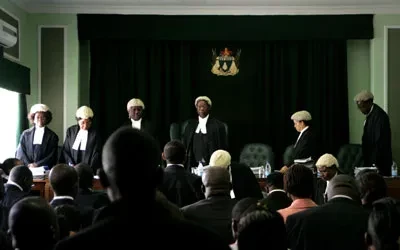
COURT procedures can confuse the general public. This is understandable because courts have to conduct trials in a prescribed manner.
Some of these procedures or rules are very technical and may appear harsh or even unfair.
These, however, are designed to balance two important goals: protecting society from crime and protecting individuals from injustice by ensuring a fair platform during the trial process.
The Zimbabwean law and international human rights guide how the courts should operate. This article, hopefully, will help to us understand the criminal justice system better.
Some of the questions we have heard include those below:
Why do courts treat an offended person as if they are the offender?
No, courts do not prosecute the victim of a crime. One of the most confusing concepts is the “adversarial system” used in courts, which Zimbabwe inherited from English common law during the colonial period. In an adversarial system, the public prosecutor (the State lawyer who represents the offended person) and the defence lawyer (who represents the accused offender) each present their side of the case before an independent and impartial judge or magistrate. The court (magistrate or judge) itself does not investigate the matter but listens to evidence presented by both parties before making a decision. This differs from the inquisitorial system used in some European countries, where judges play a more active role in investigating facts.
The adversarial system is based on the idea that truth is more likely to emerge when two opposing sides test each other’s evidence openly in court. Section 69 of the Constitution of Zimbabwe guarantees the right to a fair hearing before an independent and impartial court. International law also supports this principle. Article 14 of the International Covenant on Civil and Political Rights (ICCPR) and Article 7 of the African Charter on Human and Peoples’ Rights guarantee fair trial rights, including the right to challenge evidence and witnesses. The guiding principle being s/he who alleges must prove; hence, that process has to be thorough to ensure fairness and justice. Although the process may appear confrontational, its purpose is to prevent wrongful convictions.
- Too young to marry: The secret world of child brides
- New law answers exhumations and reburials question in Zim
- Too young to marry: The secret world of child brides
- New law answers exhumations and reburials question in Zim
Keep Reading
Why are accused persons granted bail?
Another issue that confuses many people is why someone who has committed a crime is granted bail even after being arrested for a serious offence. Many people wrongly assume that bail means the court believes the accused is innocent or that the justice system is compromised. The truth is that bail is everyone’s right. Section 70 of the Constitution protects the presumption of innocence. It is important to note that one can even be granted bail after they are found guilty by a lower court and indicate their desire to appeal to a higher court.
The court considers factors such as whether the accused is likely to abscond, interfere with witnesses, commit another offence or undermine public safety. Courts may refuse bail where there is a real risk to the administration of justice. Denying bail, however, without proper justification violates constitutional rights to a fair trial.
Why are child offenders treated differently?
People are also often puzzled by why child offenders are treated differently from adults (“with kids’ gloves”). The answer is that children are still developing. Modern justice systems recognise that children have a greater capacity for rehabilitation than adults. The Constitution provides special protection for children under section 81. The Children’s Act and the Criminal Law (Codification and Reform) Act also contain safeguards for children in conflict with the law. These safeguards are also contained in the United Nations Convention on the Rights of the Child and the African Charter on the Rights and Welfare of the Child.
This is why child offenders may be diverted away from formal prosecution, detained separately from adults or sentenced differently. Courts often consider the child’s age, maturity and possibility of reform. The objective is not to excuse criminal conduct, but to avoid destroying a child’s future.
Why do child victims/survivors have to testify in court?
A particularly emotional issue arises when child survivors of abuse are required to testify in court and face cross-examination by the accused person or his lawyer.
Many people ask why courts put children through such trauma. Section 70 of the Constitution gives accused persons the right to challenge evidence against them. Article 14(3)(e) of the ICCPR similarly guarantees the right to examine witnesses. Cross-examination is, therefore, considered an important safeguard against false accusation and wrongful conviction.
The law, however, increasingly recognises the need to protect survivors from secondary trauma. Zimbabwean courts may allow children to testify through intermediaries, use closed-circuit television or clear the courtroom during testimony. The Criminal Procedure and Evidence Act also contains provisions designed to reduce secondary trauma and or intimidation of vulnerable witnesses. Internationally, CRC and the United Nations Guidelines on Justice in Matters involving Child Victims and Witnesses of Crime require States to balance fair trial rights with the protection of survivors.
What is interference and why do courts frown on this?
Interfering with evidence and witnesses, even when done innocently, can destroy a case for the public prosecutor. Witness intimidation, destruction of evidence, coaching witnesses, leaking confidential information or discussing details publicly can seriously undermine a criminal case. Such interference may lead to acquittals because the reliability and fairness of the evidence become compromised.
This is why courts and police warn people not to tamper with evidence or interfere with witnesses. Section 184 of the Criminal Law (Codification and Reform) Act criminalises defeating or obstructing the course of justice. Interference with evidence undermines the ability of courts to determine the truth accurately.
In this age of social media, the issue has become even more important. Public campaigns declaring an accused person guilty or innocent before trial, circulating unverified allegations or exposing witnesses online may prejudice proceedings. Courts must decide cases based on properly tested evidence, not public opinion or emotion.
Balancing rights and justice
The criminal justice system is not designed only to punish offenders but also to ensure that justice is fairly delivered. There is, therefore, a need to strike a careful balance between the rights of accused persons, the protection of victims and the interests of society. Understanding these principles helps citizens to appreciate that justice is not simply about securing convictions, but about ensuring fairness for everyone involved.
Do you think it is time we changed our criminal justice system? Let us hear from you.