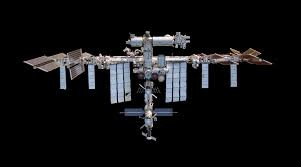
THE planned withdrawal of astronauts from the International Space Station (ISS) marks the beginning of the end of humanity’s longest continuous presence in orbit.
As the ISS prepares for retirement, we reflect on what this pioneering outpost achieved, why it matters, and what comes next in the unfolding story of space exploration. After more than two decades of continuous human presence in orbit, the ISS is preparing for astronaut withdrawal. This week, we explore what the ISS was built for, what it achieved, and why its retirement marks not an end, but the beginning of a new era in space exploration.
The primary objective of the station has been to advance scientific knowledge through research conducted in microgravity. In the absence of gravity, scientists have investigated human physiological adaptations to space, fluid dynamics, crystal growth, material formation, and the evolution of microorganisms in controlled environments.
These studies have contributed to tangible advancements on Earth, including enhanced medical approaches for bone degeneration, improved water purification techniques, optimised vaccine storage methods, and progress in industrial manufacturing processes.
Beyond science, the ISS has served as a technology proving ground. Life support systems capable of recycling air and water, radiation shielding techniques, robotic maintenance, long-duration mission protocols and psychological adaptation strategies were refined there. Every future plan to establish lunar bases or send crews to Mars depends heavily on lessons learned aboard this orbiting laboratory.
The ISS has also carried symbolic weight. In an often divided world, it stood as one of the most enduring international partnerships. Astronauts from rival nations worked side by side, sharing meals, experiments and living quarters. Even when geopolitical tensions flared on Earth, cooperation continued in orbit. Few achievements better represent the idea that science can build bridges where politics sometimes cannot.
Yet the ISS was never designed to last forever. Two decades of constant exposure to space have taken their toll. Structural fatigue, ageing systems and rising maintenance costs have made continued operation increasingly complex. At the same time, space agencies are shifting their priorities. New commercial space stations are being planned. Lunar exploration programmes are accelerating. Deep space ambitions now demand resources that were once devoted to the ISS. The announcement of astronaut withdrawal therefore signals a carefully-planned transition. In the coming years, the station will be prepared for retirement, eventually guided to a controlled de-orbit over remote ocean regions. It will burn up safely in Earth’s atmosphere, leaving behind only fragments and a vast legacy.
For many, the thought of the ISS becoming uninhabited feels emotional. It has been humanity’s constant companion in the sky, a visible sign that we had stepped beyond our home planet. Schoolchildren tracked its passes overhead. Scientists devoted careers to experiments conducted within its walls. Astronauts described it as both workplace and home. Its gradual departure from service feels like watching the lights dim in the first settlement of a new frontier.
- Time running out for SA-based Zimbos
- Epworth eyes town status
- In Full: eighteenth post-cabinet press briefing June 28, 2022
- Migrants repel Operation Dudula
Keep Reading
Yet this is not an ending without successors. Private companies are already developing commercial orbital platforms designed to host research, manufacturing and even space tourism.
Space agencies are building new infrastructure around the moon, including orbital stations and surface habitats. Mars remains the horizon toward which long-term exploration programmes are aimed. The ISS is yielding its role to the next generation of outposts.
From an African perspective, such developments may seem distant, but their influence reaches us daily. Satellite technology, climate monitoring, telecommunications, navigation services and disaster management tools all evolved from space research infrastructure like the ISS. Today, African universities launch small satellites, local startups explore Earth observation services, and young engineers find opportunities in global aerospace industries that did not exist a generation ago.
The ISS also offers a lesson beyond science. It demonstrates that large-scale technological success requires patient collaboration, sustained investment, disciplined planning and trust across borders. These same principles underpin innovation on Earth, whether in digital transformation, artificial intelligence, energy systems or national development strategies.
As the station continues to circle above us, passing silently over Zimbabwe several times a day, it carries with it the accumulated effort of thousands of scientists, engineers and explorers. Its modules contain stories of breakthroughs, failures, perseverance and hope. Its contribution to human progress is already secured in history. The withdrawal of astronauts from the ISS is therefore not a retreat from space, but a handover. One chapter of exploration is closing so that another may begin. Humanity learned to live in orbit on the ISS. The next step is to live on the moon, travel to Mars and build a truly multi-planetary presence.
When historians look back, they will likely describe the ISS as the cradle of permanent human life beyond Earth. And as its era draws toward conclusion, we witness a rare moment in technological history, the graceful transition from the first outpost in the sky to the greater frontiers that await.
- Bangure is a filmmaker with a media degree and substantial experience in media production and management. He previously served as the chairperson of the National Employment Council for the Printing, Packaging, and Newspaper Industry. A dedicated enthusiast and scholar of artificial intelligence, Bangure combines his creative and technical skills to delve into innovative advancements. — info@hub-edutech.com.