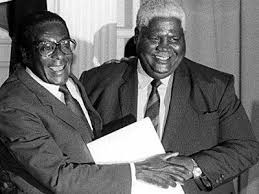
IN commemorating the 38th anniversary of the historic Unity Accord, a foundational pact signed by the late national heroes Robert Mugabe and Joshua Nkomo, President Emmerson Mnangagwa addressed the nation with a message of cohesion, urging citizens to shun tribalism and remain united as one Zimbabwe.
He eloquently stated that Zimbabwe is a unitary State, a land of many cultures and tribes united under one flag, asserting that no culture or tribe is superior to another and that differences must be resolved amicably through dialogue, an inheritance and ethos left by the nation’s founding fathers.
On the surface, these are the words one expects and, indeed, yearns to hear from a national leader, especially on a day consecrated to unity. They are soothing, aspirational, and speak to the highest ideals of nationhood — a collective pledge, as the President put it, to guard and promote the sacred pillar of national unity, ensuring that no personalities become instruments of division.
Yet, for many Zimbabweans listening, these words, however, beautifully crafted, resonate with a hollow echo, for they float above a landscape scarred by the very divisions they condemn, revealing a troubling chasm between the rhetoric of unity from the high offices of State and the complex, often toxic realities of everyday life on the ground.
The central problem lies not in the articulation of the ideal but in its glaring disconnection from observable societal dynamics.
The President rightly asserts that there is no room for antagonistic and divisive differences that breed hatred and disharmony under his administration and that no attempt to divide us will ever succeed.
However, a cursory glance at the nation’s political and social fabric reveals a different story.
Partisan rancour has become a staple of our national discourse, with political allegiance frequently morphing into a source of deep-seated hostility that permeates communities, workplaces and even families. The toxicity is palpable, transforming healthy political competition into a bitter, zero-sum game where the ‘other’ is not merely an opponent but often an enemy.
- MPs are ignorant: Charamba
- NoViolet Bulawayo’s new novel is an instant Zimbabwean classic
- Jah Prayzah, Zanu PF rekindles ‘lost love’
- Bank workers appeal to Ncube for tax relief
Keep Reading
This partisan bitterness frequently intersects with and exacerbates older, subtler lines of tribal affiliation, contrary to the President’s declaration that no tribe is superior.
While outright tribal conflict may be rare, perceptions of preferential treatment, skewed resource allocation and ethnic stereotyping persist in whispers and sometimes in louder, more damaging assertions, undermining the very unity celebrated on December 22.
This disparity between word and deed becomes even starker when one examines the economic sphere, a critical arena for fostering genuine national cohesion. The President spoke of working together as one indivisible nation towards a prosperous, upper-middle-income society for the benefit of both current and future generations, celebrating victories in agriculture and mining.
Yet, the lived experience for millions is defined by a stark and growing inequality that breeds resentment and fragments the social compact.
Rampant corruption and blatant elitism have created a system where wealth and opportunity appear concentrated in the hands of a connected few, creating a perception — often substantiated by visible evidence — of a country where the principle of “leaving no one and no place behind” is a slogan rather than a practised policy.
When citizens witness grand accumulations of wealth amid widespread poverty, when they see public resources seemingly diverted for private gain, the trust necessary for true unity is eroded. Unity cannot be forged solely through speeches; it must be nurtured through equitable economic justice and a demonstrably fair distribution of the nation’s wealth.
The current climate of perceived impunity for the powerful and struggle for the ordinary citizen fosters not unity but a deep-seated cynicism that questions the sincerity of calls for national togetherness.
Perhaps the most visceral evidence of this disconnect is the toxic miasma that pervades our digital public square, particularly on social media platforms.
The President urged patriotism in defending the national image and identity of a united, peaceful and hardworking people. Yet, navigating Zimbabwean social media reveals a startling counter-narrative: a space riven with vitriol, personal attacks, hatred and deeply divisive language that runs along political, tribal and even generational fault lines.
The anonymity and distance of the digital world have unleashed a torrent of negativity that contradicts the peaceful character we purport to uphold. This online toxicity is not a trivial matter; it is a reflection of deeper societal fractures and frustrations that have found a potent outlet.
It shows people struggling with anger and disillusionment, their discourse a far cry from the amicable dialogue the President prescribes for resolving differences. When citizens routinely dehumanise one another online over political disagreements, the foundational respect required for national unity is severely compromised.
Therefore, the task ahead is monumental and requires moving beyond the cyclical ritual of annual exhortations.
The call for unity must be operationalised through concrete, transparent and consistent actions that address the root causes of division. First, political leadership must demonstrably transcend partisanship in both word and action. This means not only preaching unity but actively condemning and disciplining voices within all political structures, including one’s own, that fuel hatred and division.
It requires fostering a political culture where robust debate is separated from personal vilification. Second, the fight against corruption must be seen as an existential imperative for national unity.
A truly independent and resolute application of the law, holding the powerful to account without fear or favour is essential to restoring public faith and creating a sense of shared destiny.
Economic policies must be visibly inclusive, designed to bridge the inequality gap and provide tangible hope to all regions and communities, giving meaning to the promise that no place will be left behind.
Furthermore, national dialogue must be institutionalised beyond formal political structures to include civil society, faith groups, the diaspora and ordinary citizens in genuine conversations about the nation’s future.
This dialogue cannot be a monologue from the State but a reciprocal, respectful engagement that acknowledges grievances and seeks collective solutions. Finally, there is a need for a national civic re-education that actively promotes the values of tolerance, respect and shared identity, particularly among the youth. This should be embedded in educational curricula and championed by all community leaders.
Mnangagwa’s Unity Day message contains the essential blueprint for the Zimbabwe we all desire: “a uniquely diverse society, united under one flag and one national anthem”.
His words that “our national unity is sacred” are profoundly true.
But for these words to cease being a script and become a lived reality, they must be matched by an unwavering commitment to dismantling the architectures of division — be they political, economic or social — that currently mock this sacred ideal.
The unity we seek will not be gifted from a podium; it must be painstakingly built, day by day, through justice, equity and a genuine, embodied respect for every citizen.
Only then can the spirit of the 1987 Unity Accord move from a commemorated historical event to the defining condition of our present and future.