The African Development Bank (AfDB) has backed a new financial architecture aimed at leveraging the balance sheets of African development finance institutions (DFIs) to mobilise resources needed to close the continent’s financing gap and accelerate structural transformation.
At the centre of the initiative is the New Architecture for Africa’s Development (NAFAD), which seeks to improve coordination among DFIs, pension funds, banks, and insurance companies to pool resources and maximise the impact of available capital.
AfDB president Sidi Ould Tah has been championing this collaborative approach as a way to bridge Africa’s financing deficit.
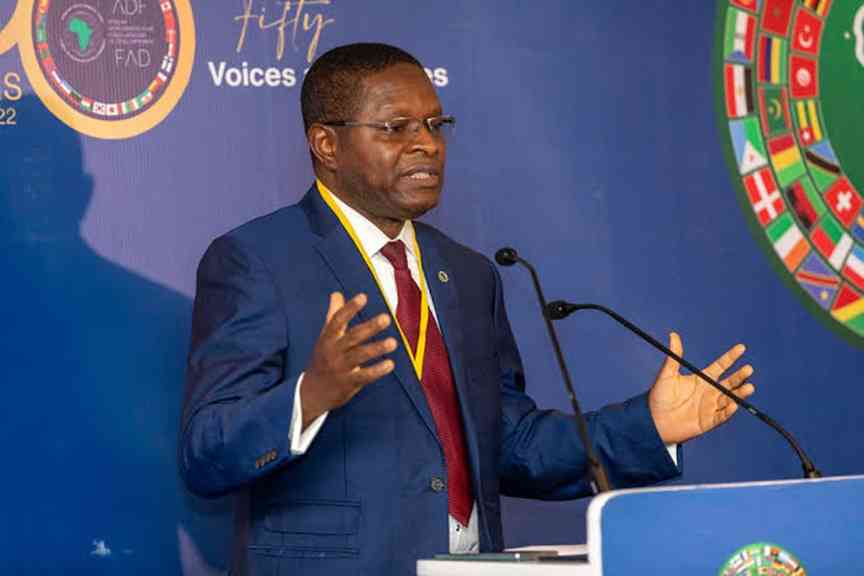
Speaking at a pre-2026 AfDB Annual Meetings briefing, the bank’s chief economist and vice-president for Economic Governance and Knowledge Management, Kevin Urama, said NAFAD is anchored on the principle that collective action delivers greater long-term impact.
“There is an adage which says, ‘If you want to go fast, go alone; if you want to go far, go together’,” he told journalists. So, at the African Development Bank, under the president Ould Tah's leadership, we want to go far.”
Urama said the initiative would help close Africa’s financing gaps by enabling DFIs to leverage their combined balance sheets, ensuring greater value from every dollar invested on the continent.
He emphasised that the approach is centred on risk mitigation and risk sharing.
“This will ensure that resources mobilised through these development financing architectures go further by optimising the balance sheets of participating countries and institutions,” Urama said.
- Renault hands Russian assets to Moscow
- New perspectives: Building capacity of agricultural players in Zim
- News in depth: Mnangagwa’s push for $12 billion mining industry imperils communities
- New perspectives: Building capacity of agricultural players in Zim
Keep Reading
He added that African governments also have a critical role to play through stronger domestic resource mobilisation, improved macroeconomic management and governance reforms. Urama said these measures would reduce risk perceptions and help attract additional investment.
“I am more confident than ever that the AfDB and African DFIs, working with global partners, will be able to go far in addressing Africa’s financing needs,” he said.
Urama noted that Africa requires about US$1,3 trillion to achieve the Sustainable Development Goals, US$221 billion annually to close its infrastructure gap, and US$402,2 billion annually to support structural transformation.
“These numbers are mind-boggling,” he said.
Urama also highlighted a paradox: Africa has vast financing needs that coexist with significant untapped domestic capital, estimated at US$4 trillion.
This capital could be mobilised through better policy implementation, reduced resource leakages and stronger governance.
He warned that the challenge is being compounded by rising geopolitical fragmentation, which is reshaping global financial flows as major economies redirect resources towards domestic priorities.
This comes amid declining official development assistance, further affected by the United States’ “America First” policy, which has encouraged donor countries to adopt more inward-looking approaches.